


As the technological landscape races toward an increasingly automated future, industry observers and technologists are beginning to identify the definitive skill of the coming decade: the ability to effectively harness compute. In an era dominated by artificial intelligence, large language models (LLMs), and complex digital infrastructure, compute has emerged as the modern equivalent of geopolitical or industrial power. Those who control and utilize compute possess the vital resources needed to fuel artificial intelligence systems, drive large language models, and intelligently coordinate their outputs through sophisticated agentic sandboxes, databases, and interconnected services.
However, a fundamental misunderstanding often plagues how individuals and organizations approach this new paradigm. The immediate, knee-jerk reaction for many is to rush out and purchase high-end hardware, equating sheer accumulation of machinery with capability. Yet, according to industry analysis, this approach captures only half of the truth. Compute is not merely a form of brute-force power comparable to physical labor or raw industrial output; it is deeply intellectual. Consequently, how efficiently and effectively an individual or organization utilizes their compute resources matters just as much as—if not more than—the physical hardware they own.
A striking illustration of this dynamic can be seen in everyday consumer behavior within the tech community. For instance, individuals who purchase expensive machines like Mac Minis specifically to run lightweight applications such as OpenClaw often display what experts might term compute illiteracy. These users frequently fail to understand their actual compute constraints, investing heavily in hardware that does not genuinely or tangibly expand their operational capabilities.
Applications like OpenClaw are remarkably light on resource consumption and can run seamlessly on affordable, rented virtual servers costing as little as ten dollars a month. Spending over a thousand dollars on a brand-new desktop or mini-PC for such a lightweight task represents a clear misallocation of capital. On the other hand, a more sophisticated practitioner might push the absolute limits of OpenClaw on a standard local laptop before finally upgrading to a Mac Mini to expand their workflow. Even then, the journey does not stop there. To extract maximum value from the investment, this advanced user might develop specialized agents designed to execute specific, targeted tasks directly on the machine. Taking efficiency a step further, they could construct a tiered intelligence architecture system capable of intelligently delegating routine LLM calls to a local Ollama model running on that same Mac, while routing heavier or more complex demands to enterprise-grade cloud models like those from OpenAI and Anthropic.

This disparity highlights a broader trend: while average hobbyists often struggle with compute illiteracy, failing to harness their hardware effectively, a very different challenge faces the professional software engineering sector. Modern startup engineers frequently build impeccably architected systems, yet they remain entirely dependent on major cloud providers. Their common rationale is straightforward—running your own physical hardware is difficult. As a result, this group represents the exact opposite demographic of the typical consumer enthusiast. They are exceptionally skilled at utilizing compute, but fundamentally compute poor. Because they own no underlying means of production, such as physical servers or proprietary hardware, they are forced to pay perpetual rent to corporate cloud giants, effectively acting as tenants in a digital landscape controlled by others.
Ultimately, truly harnessing compute is a multifaceted skill that requires the simultaneous application of both capital and labor. Relying exclusively on one while ignoring the other inevitably leaves significant technological capabilities untapped. Owning hardware without knowing how to optimize it leads to waste, while knowing how to optimize software without owning any physical infrastructure leaves one vulnerable to rising cloud costs and external platform dependencies.
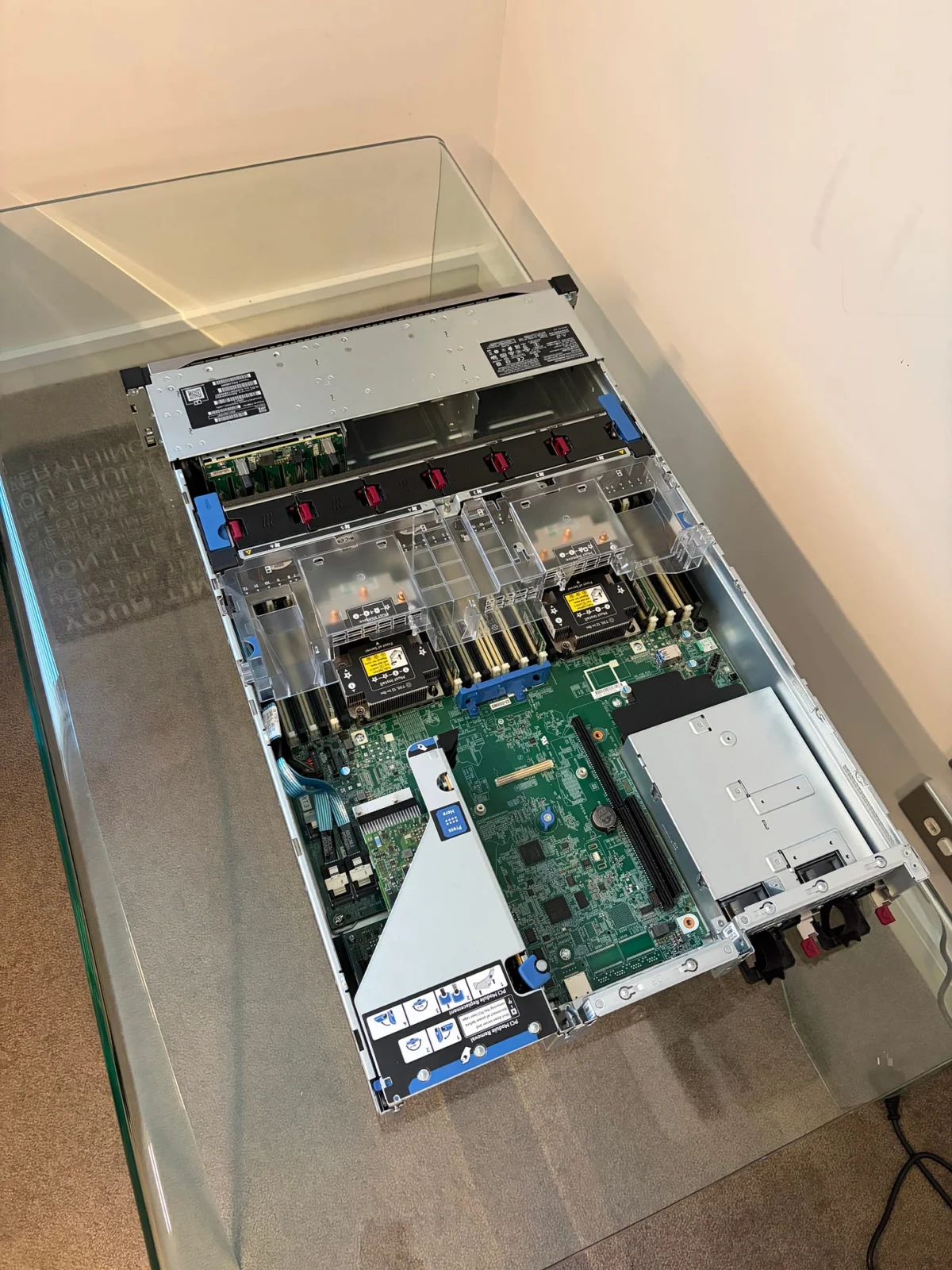
Recognizing this delicate balance, forward-thinking technologists are already taking matters into their own hands to avoid future technological bottlenecks. Illustrating this personal commitment to digital independence, some industry commentators have begun acquiring their own enterprise-grade hardware, such as custom 2U rack servers equipped with substantial memory capacity, multi-core processors, and terabytes of solid-state storage. By investing directly in physical infrastructure, these individuals are consciously opting out of total dependence on future compute overlords.
As these dynamics continue to reshape the digital economy, the division between those who merely rent infrastructure and those who truly understand how to acquire, manage, and optimize processing power is becoming stark. Observers note that this evolving landscape is laying the groundwork for a new socioeconomic strata, suggesting that society’s forthcoming elite class will inevitably be defined not by traditional wealth or industrial holdings, but by their mastery as the techno-compute class.


Comments (0)