


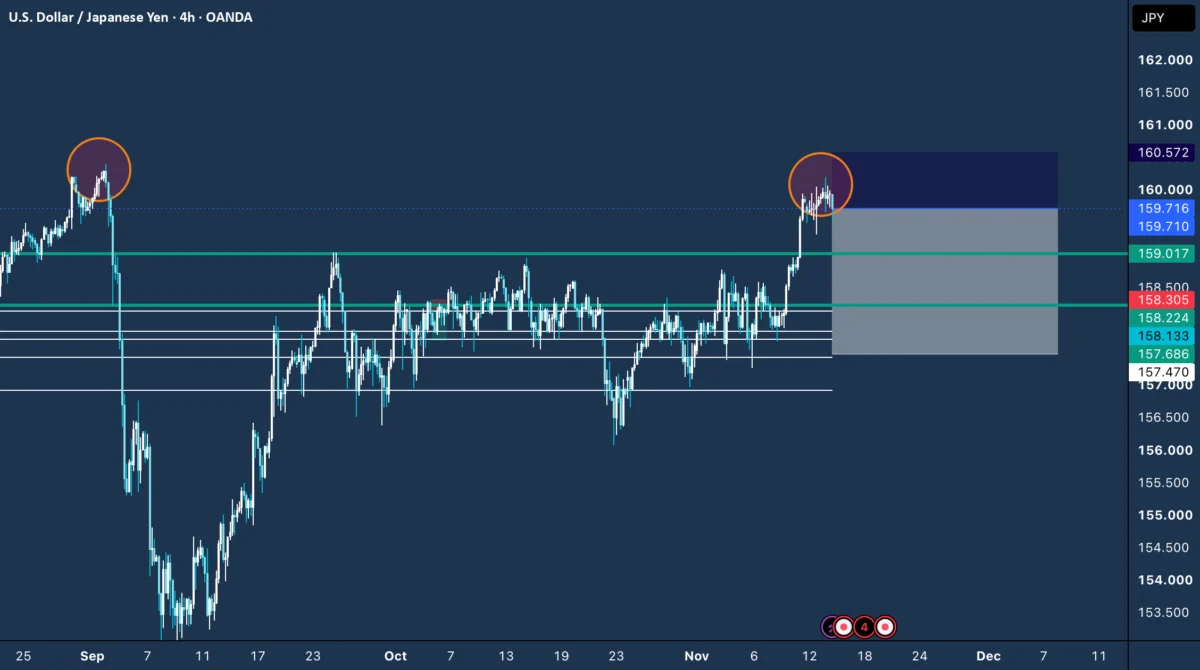
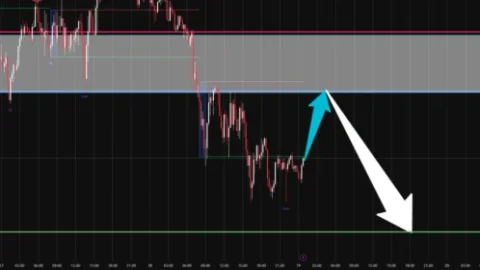
The USD/JPY currency pair has once again pressed directly into a highly scrutinized four-hour supply zone anchored around the psychological 160.000 threshold, drawing intense focus from market participants. This specific technical region carries considerable weight for traders monitoring the Japanese Yen and the US Dollar, as it represents the exact same geographical price area that previously catalyzed a sharp and aggressive sell-off during prior trading sessions. As spot prices drift into this familiar territory, current market dynamics indicate that the bullish momentum driving the pair higher is rapidly stalling, giving way to distinct technical indicators of price rejection.
According to the latest trading desk updates, market participants are eyeing an entry point near 159.710, anticipating that institutional sellers will step in to defend this formidable barrier. The rationale behind this bearish outlook rests on the historical significance of the supply zone. When currency pairs revisit areas of previous heavy selling pressure, analysts frequently monitor whether historical supply will once again overwhelm demand. In this instance, the immediate price action suggests that buyers are struggling to sustain upward traction as they encounter a wall of resting sell orders clustered just beneath the 160.000 handle.
For those positioning for a downward correction from these levels, a carefully defined risk management framework has been established. The proposed stop loss is positioned at 160.572, providing a buffer just above the immediate supply zone to account for potential volatility spikes or temporary market sweeps that frequently occur around major psychological figures and historical resistance levels. Meanwhile, the primary profit target has been set significantly lower at 157.470, outlining a clear directional trajectory for a potential bearish wave should the resistance hold firm against incoming buying pressure.
Navigating this potential reversal requires breaking through several intermediate technical milestones. As the currency pair attempts to reverse course from the 160.000 vicinity, it must first navigate through key layers of intermediate support. The immediate downside objectives include testing support levels at 159.017 and subsequently 158.305. A decisive break beneath these intermediate plateaus would pave the way for a more extended decline toward the ultimate profit target of 157.470. Market observers emphasize that intermediate support levels often act as temporary consolidation phases where momentum can either stall or accelerate depending on broader macroeconomic influences and prevailing market sentiment.
The significance of the 160.000 handle extends far beyond simple technical chart analysis, carrying profound psychological implications for foreign exchange markets. Currency pairs trading near historical inflection points frequently attract heightened algorithmic activity, retail speculation, and institutional rebalancing. The current stalling pattern observed on the four-hour time frame suggests that market participants are actively weighing the persistence of the current upward trend against the historical precedent of a violent rejection from the same zone. Whether sellers can successfully muster enough downward pressure to breach the 159.017 and 158.305 supports remains the central question for the immediate trading sessions.
As market conditions evolve around this critical juncture, professional traders and risk managers continue to emphasize the paramount importance of disciplined capital preservation. Foreign exchange markets are inherently volatile, and technical zones, while historically reliable, do not guarantee identical outcomes upon retest. Proper position sizing and adherence to predetermined stop-loss parameters—such as the 160.572 threshold noted in the setup—remain essential tools for safeguarding trading capital against unexpected market anomalies or sudden shifts in macroeconomic drivers.
Disclaimer
The information and publications provided herein are not meant to be, and do not constitute, financial, investment, trading, or other types of advice or recommendations supplied or endorsed by TradingView. Market participants are encouraged to conduct their own thorough research and consult with qualified financial professionals before executing any trades or investment strategies based on technical setups or market commentary.

Comments (0)