


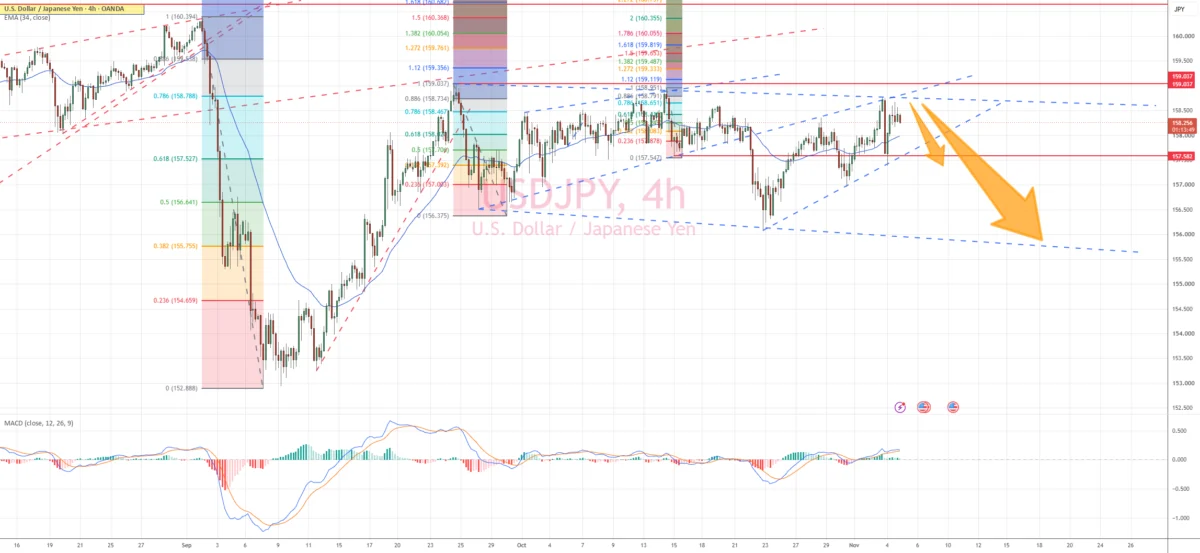
The analysis, shared within the financial trading community, centers on the technical behavior of the currency pair around the mid-158 range. According to the breakdown, the current market structure presents a favorable mathematical proposition for traders looking to bet against further upside momentum in the greenback relative to the yen. By targeting short entries specifically within the 158.25 to 158.35 band, market participants can tightly manage their risk parameters while seeking optimal positioning as the pair interacts with established technical boundaries.
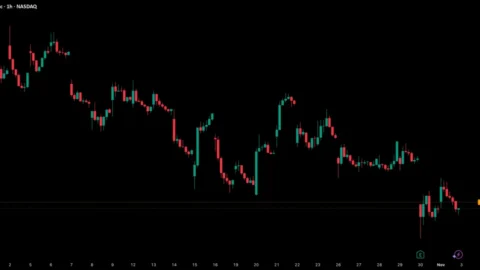
At the core of this short thesis is the integrity of the prevailing consolidation channel governing price action on the chart. Technical analysts frequently monitor these bounded price ranges to gauge market sentiment and anticipate the next directional breakout or continuation. As long as this current consolidation channel holds firm against upward tests, the technical outlook favors a corrective move downward. The assessment suggests that the USD/JPY pair is well-positioned to carve out either a lower low or a higher low within the broader structural context, reinforcing the validity of a short bias under current market conditions.
The commentary underscores the importance of risk management in modern foreign exchange trading, where asymmetrical risk-to-reward ratios dictate successful execution. In currency markets, particularly when dealing with major pairs like the US dollar and the Japanese yen, identifying precise entry zones is critical due to the constant threat of volatility and central bank intervention risks. The 158 handle has historically attracted significant attention from market participants, policy watchers, and algorithmic traders alike, making technical precision paramount for anyone attempting to fade the prevailing trend or capitalize on range-bound oscillations.

Technical analysis frameworks such as chart patterns, harmonic patterns, and wave analysis continue to form the analytical backbone for many active traders navigating these turbulent currency waters. By examining historical price swings and repetitive geometrical structures on the charts, analysts attempt to forecast future price trajectories with a higher degree of statistical confidence. In this instance, the combination of pattern recognition and channel analysis points directly toward a bearish tilt for the currency pair as it tests the specified threshold.
As trading activity persists around these elevated levels, market participants will be closely watching whether the upper boundaries of the consolidation channel can successfully repel buying pressure or if a decisive breakout will invalidate the short setup. For now, the analytical perspective remains clear for those aligned with the viewpoint: as long as the technical parameters remain intact, shorting the USD/JPY pair within the 158.25 to 158.35 range stands out as the preferred strategic approach.
Platform providers and financial networks routinely issue standard disclaimers reminding market participants that commentary, chart analyses, and published ideas shared by community members do not constitute formal financial, investment, or trading advice. Trading foreign exchange carries a high level of risk and may not be suitable for all investors, as market conditions can shift rapidly in response to macroeconomic data releases, geopolitical developments, and shifts in monetary policy expectations.

Comments (0)