


Software development has officially entered a new era, but with this transition comes an entirely unprecedented operational bottleneck. For decades, the primary challenge of building software was writing the code itself. Human engineers were the ultimate scarce resource, and scaling an engineering organization meant hiring more developers to churn out lines of logic, features, and fixes. Today, that fundamental paradigm has been completely inverted. Writing code is no longer the hard part—trusting it is.
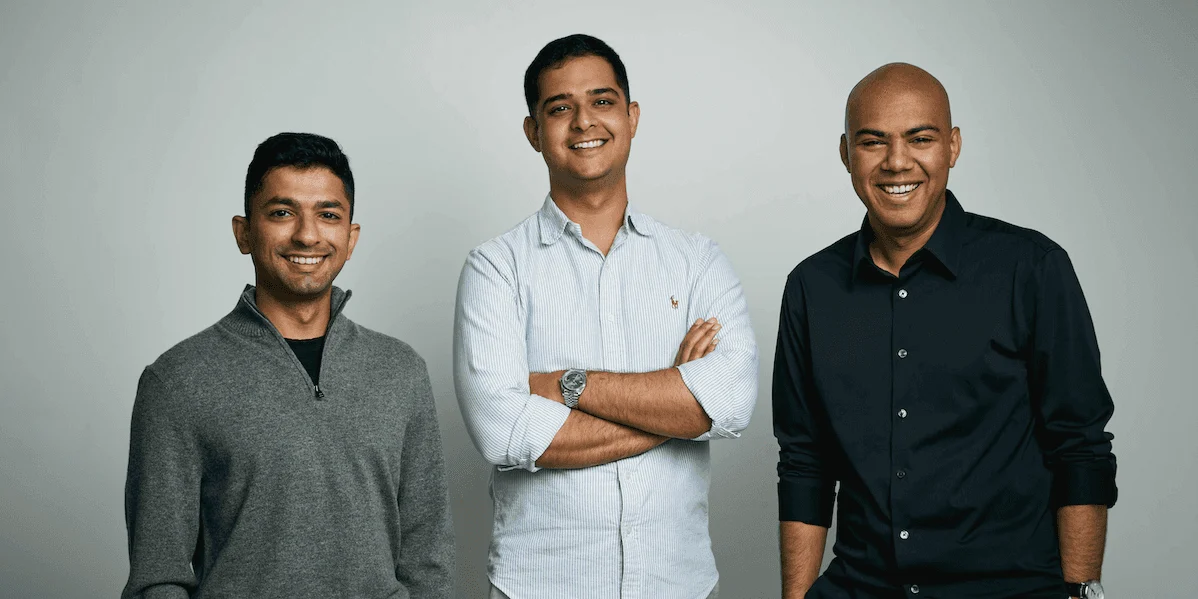
With the advent of sophisticated coding agents, development teams are now producing more code than any human team can realistically read or any legacy system can adequately verify. At the forefront of solving this massive infrastructure crisis is Blacksmith, a high-performance validation platform founded by Aditya Jayaprakash (JP), Aayush Shah, and Aditya Maru. Recognizing that the modern engineering workflow is choking under the weight of AI-generated code, the company has built specialized infrastructure designed to process code validation at the speed of autonomous agents. This vision has recently culminated in a major Series C funding round to support the company’s hyper-growth as it scales to meet global demand.
The magnitude of this shift was recently highlighted by engineering teams at the cutting edge of AI deployment. Last month, Anthropic’s engineering organization published a detailed breakdown of what happened internally as their reliance on coding agents scaled dramatically. Engineers began shipping roughly eight times as much code per quarter compared to previous periods. Predictably, their internal test suite grew tenfold to keep pace with the influx of modifications. However, the most staggering metric was the volume of continuous integration (CI) jobs—the automated builds and comprehensive tests that inspect every single code change before it is approved for production. Within just six months, Anthropic’s CI job volume skyrocketed by 25 times.
While Anthropic is operating far out on the adoption curve, industry analysts note that they are traveling down the exact same trajectory as every other software-driven enterprise. Anthropic’s primary warning and advice to the rest of the technology sector was remarkably stark: engineering leadership must plan for a staggering 25-fold increase in CI load within the span of just two quarters.
For generations, the mechanics of software development scaled in a linear fashion as a direct function of human engineering capacity. Shipping more products meant recruiting more talent. That traditional model has now dissolved entirely. Modern developers no longer sit at a keyboard typing out every individual character; instead, they direct fleets of intelligent coding agents that operate concurrently, around the clock, and with increasing degrees of autonomy.
Crucially, these advanced AI agents do not produce finished, pristine software ready for immediate deployment. Rather, they generate endless streams of attempts—including experimental patches, targeted tests, database migrations, and throwaway branches—each designed to iterate relentlessly against a validation test suite until the system deems it ready to merge. Meanwhile, the quiet, foundational backbone of software development that is supposed to validate, test, and secure all of this code has remained largely unchanged for years, buckling under the sheer velocity of modern output.
Validating this tidal wave of code has also never carried higher stakes. Automated AI coding workflows frequently produce complex security vulnerabilities, and ironically, the exact same advanced model capabilities that write the code make those embedded flaws significantly more sophisticated and dangerous. Consequently, the traditional validation and testing infrastructure that was supposed to catch these errors is straining under extreme pressure right at the moment when developers need it the most. Because of the unprecedented scale and sheer velocity of this industry-wide shift, the primary constraint in software engineering has definitively migrated from writing code to proving conclusively that it works and is completely safe.
This systemic breakdown is the exact problem that Blacksmith set out to solve when the founding team first conceptualized the company. The enterprise initially focused its efforts on radically accelerating CI pipelines. By implementing a simple, one-line change in an existing workflow file, software developers utilizing Blacksmith experience dramatic performance gains, seeing their continuous integration jobs complete twice as fast while cutting associated computing costs by an average of 60%. Beneath this remarkably streamlined product experience lies an underlying technical stack that has been purpose-built from the bare metal up, architected specifically to absorb sudden demand spikes from enterprise customers while growing increasingly faster and more efficient as it scales.
The market response to this infrastructure has been swift, and developers have taken notice. Blacksmith’s business metrics have experienced explosive, exponential growth over the past year. The company’s customer base has expanded from roughly 700 companies a year to over 10,000 active enterprises today. Operational volume tells an equally dramatic story: weekly CI jobs processed by the platform have surged 18 times, climbing from 5 million to an astonishing 90 million jobs in the year 2026 alone. Parallel to this usage boom, annual recurring revenue (ARR) has grown 17 times over the same timeframe, with the platform’s largest enterprise customers now investing more than $1 million per year to keep their engineering pipelines moving.
A significant driver of confidence for investors backing Blacksmith is the exceptional pedigree of the team behind the technology. Co-founders JP, Aayush, and Maru have maintained a professional and personal relationship since their undergraduate years together at the University of Waterloo. Prior to launching Blacksmith, they cultivated a relentless, maniacal focus on building hyper-performant, highly resilient distributed systems during their respective tenures at Cockroach Labs and Faire.
They officially founded Blacksmith in 2024, during a transitional period when basic code autocomplete features were rapidly giving way to more capable coding assistants. Their founding thesis was built on the rock-solid conviction that the sheer volume of code requiring testing would inevitably expand by orders of magnitude. While the rest of the global tech industry only woke up to this reality in 2026 with the arrival of truly autonomous coding agents, Blacksmith had already spent years building the necessary infrastructure to handle it. Today, the Blacksmith team remains talent-dense and is expanding its workforce rapidly, backed by an ambitious product roadmap featuring several major enterprise launches planned for the coming months.
As the software industry braces for a future where intelligent agents generate code faster than human eyes can ever review it, reliable validation infrastructure has become the ultimate bottleneck to technological progress. The world is on the cusp of running vastly more software than humanity has ever written in history, and automated systems must ensure that it functions securely and reliably at scale. Backed by its latest funding round, the company continues to develop infrastructure that runs at agent speed, transforming how code is validated and verified as the industry charges into the future.



Comments (0)