



In the fast-evolving landscape of modern enterprise technology, a significant consolidation is reshaping the cybersecurity sector as AI adoption accelerates. Oasis Security, a pioneer in the management and protection of non-human identities, is joining forces with Cyera, a prominent leader in data security. This strategic combination brings together two companies backed by Sequoia Capital from their early Series A stages, uniting complementary technologies designed to address the complex security challenges introduced by the proliferation of autonomous artificial intelligence systems and agents in the corporate workspace.
The roots of this convergence trace back years before Oasis Security was officially founded. During an initial meeting in 2021 with co-founder Danny Brickman, early investors recognized a distinct professional caliber and relentless drive. That same operational intensity and technical clarity had previously been observed in the founders of Wiz and Cyera. Like Brickman, those founders honed their leadership and technical skills through Talpiot, the elite research and development program of the Israel Defense Forces. When Sequoia backed Oasis Security at the Series A stage, those parallel backgrounds felt like a promising indicator of execution capability. Over time, however, the shared origins of these entrepreneurial teams turned out to be literally connected to the architectural solutions they built, culminating in a powerful industrial alignment between Oasis and Cyera.
When Oasis Security first entered the market three years ago, its core pitch was straightforward yet revolutionary: modern enterprises were rapidly approaching a tipping point where non-human identities—such as service accounts, application programming interface keys, OAuth tokens, and automated credentials—would vastly outnumber human users. At the time, very few organizations possessed robust mechanisms to track, govern, or secure these programmatic identities. Today, that operational reality has intensified dramatically. Every emerging AI agent routinely creates and utilizes non-human identities that wield significant functional permissions and carry a substantial blast radius. Unlike human users, these autonomous identities operate continuously and do not conform to the behavioral patterns that legacy identity and access management tools were engineered to monitor.
The mainstream adoption of generative AI and autonomous workflows has transformed non-human identity from a specialized subcategory of identity management into a critical boardroom discussion for Chief Information Security Officers. Danny Brickman and co-founder Amit Zimerman established Oasis to solve this exact dilemma, pioneering what they describe as agentic access management to secure the intricate web of credentials that empower automated systems.
Simultaneously, Cyera approached the broader paradigm shift in enterprise security from an entirely different operational angle. Founded by Yotam Segev, Tamar Bar-Ilan, and Yonatan Itai, Cyera set out to answer a deceptively simple yet historically elusive question: where does an organization’s sensitive data actually reside, who has the ability to access it, and what exposure risks exist across the infrastructure? As AI agents began actively reading, writing, and executing transactions against enterprise data repositories, Cyera’s leadership reached a fundamental realization that now appears self-evident. Securing artificial intelligence safely requires a holistic approach that simultaneously protects the underlying data assets, the identities—both human and non-human—interacting with that data, and the autonomous agents executing the operations.
When evaluated side by side, the product portfolios of Cyera and Oasis complement each other with geometric precision. Cyera maintains deep visibility into the precise location and sensitivity of enterprise data. Oasis maintains comprehensive oversight of who and what can actually touch that data down to the individual service account, API key, and agent credential, while continuously monitoring whether those credentials are operating within authorized parameters. This dynamic functions much like a high-security financial vault, where optimal protection relies on knowing both what valuable assets are stored inside and precisely who is approaching the perimeter. Data security establishes what is at stake and highlights potential exposure, while identity security verifies whether the entity interacting with the data is legitimate and authorized. Together, the combined platform covers the entire lifecycle and traversal path of an AI agent as it navigates an enterprise environment, connecting the data it manipulates directly to the identity it uses to execute the task.
Beyond the technological synergy, the acquisition offers powerful operational and go-to-market advantages. Cyera has rapidly constructed one of the most formidable enterprise go-to-market organizations in the technology sector, achieving commercial scale in a fraction of the time typically required for an early-stage startup. By integrating into this established commercial engine, Oasis’s advanced product capabilities gain immediate access to major enterprise accounts and distribution channels that would otherwise have taken years to cultivate independently. The broader market dynamics leave little room for delay. The race is actively underway to establish the first truly comprehensive AI security platform that seamlessly unifies data protection, identity governance, and agentic access control. Enterprises standardizing their operations around agentic AI will naturally gravitate toward unified platforms that eliminate fragmented point solutions. The fusion of Cyera and Oasis delivers both the technological completeness and the commercial velocity required to capture that foundational market position.
In hindsight, the strategic fit between the two organizations feels almost inevitable, reflecting the dense networks of specialized technical talent originating from specific hubs in Israel. Alumni of elite military technology units, including Talpiot and Unit 8200, have accounted for a disproportionate share of major global cybersecurity enterprises founded over the past decade. While the structural coincidence of two Sequoia-backed portfolio companies arriving at complementary halves of the modern AI security puzzle is notable, the clean execution of their integration underscores the shared strategic vision of their leadership teams.
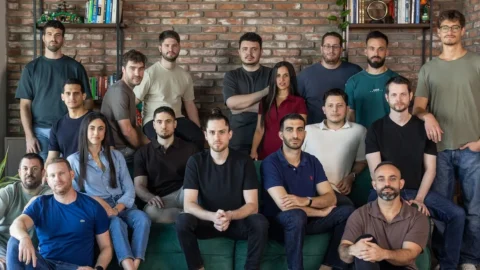
In under three years, Danny Brickman, Amit Zimerman, and the entire Oasis team built a category-defining enterprise in the non-human identity sector, scaling from a conceptual startup to a trusted platform relied upon by major corporations for large-scale agentic access management. Such rapid maturation demands rigorous engineering execution and a founding team capable of anticipating the industry-wide shift toward agentic AI long before it became conventional wisdom in the security community. Having supported both Cyera and Oasis through their formative Series A milestones, early investors remain positioned to champion the combined team as they embark on their next phase of growth, entering a larger operational stage tailored to the magnitude of the modern cybersecurity market.



Comments (0)