


It has been just under a year since active investing in semiconductors shifted from a speculative thesis into a dominant market paradigm. When initial warnings regarding severe compute shortages surfaced in August 2025, they proved remarkably accurate. By September of that year, acute RAM shortages materialized, propelling semiconductor equities onto a parabolic trajectory. For investors who began migrating capital away from volatile crypto assets into foundational hardware around that time, the returns have been staggering. Virtually every name highlighted in early machine economy analyses has doubled since late last year.
As the landscape has evolved, investment strategies within the sector have undergone significant refinement. By April 2026, conviction reached a level where entire net worths have been concentrated into just three primary stocks: SK Hynix, SanDisk, and Micron. While options trading around other semiconductor names remains common, the core of this conviction rests entirely on memory. These are equities that have surged anywhere from 250% to 1,000% over the past year alone. Although earlier entries would have yielded even greater gains, the prevailing belief is that the market remains in the early innings of this secular shift.
For most market participants navigating the crowded artificial intelligence trade, a pervasive sense of having missed the boat—coupled with uncertainty regarding optimal asset allocation—remains widespread. The singular answer to this dilemma is memory by far. Initial skepticism regarding memory has given way to an overwhelming realization through market observation: memory is the single largest play that Wall Street fundamentally fails to understand.
To comprehend the memory trade, one must begin with the underlying technology. In the ongoing AI race, the public obsession tends to focus heavily on the models themselves, with the layperson assuming that a powerful computer or graphics processing unit (GPU) is the sole requirement for handling complex computations. While computational power is undeniably vital, what is routinely

overlooked is that the scale of these computations must be actively held within the system’s operational memory—functioning much like a human carrying digits over in their head during mental math.
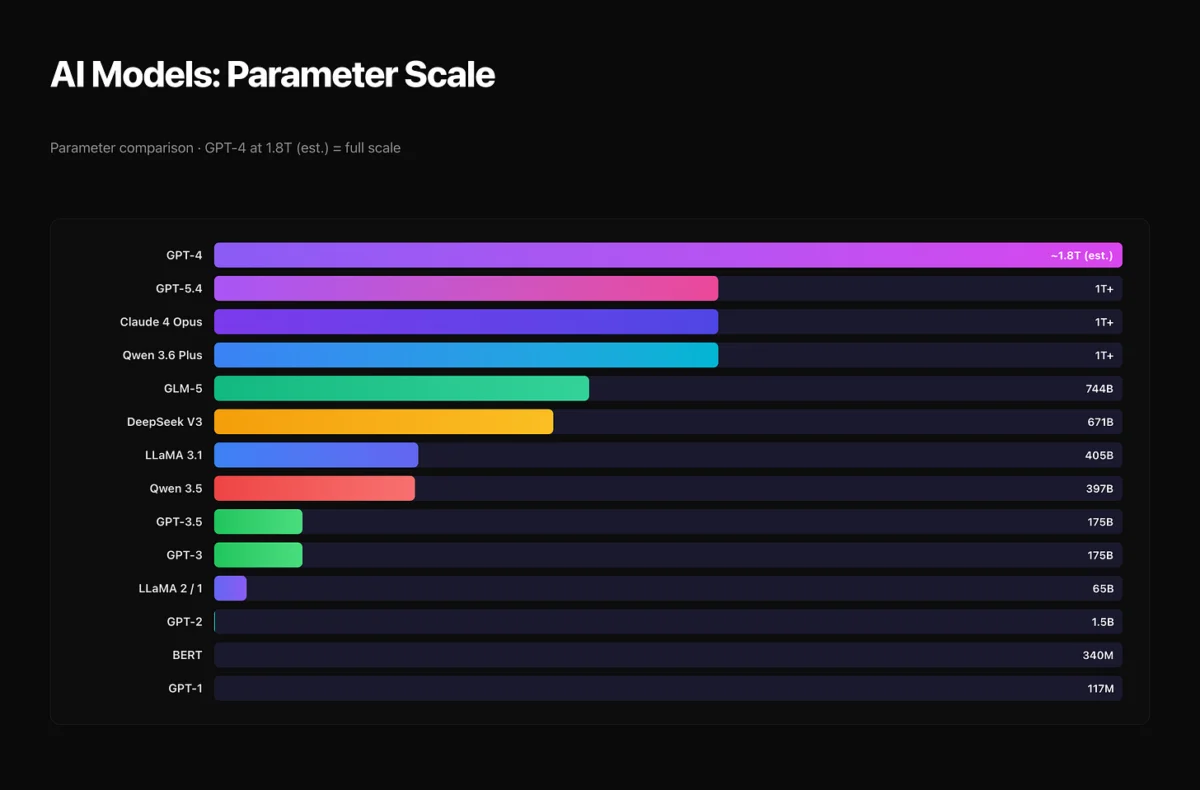
Executing these tasks successfully requires two core elements: raw processing speed and immediate working capacity. While the general public barely grasps the former, they understand the latter even less. Artificial intelligence models are typically categorized by their parameter counts. A core premise of modern hardware scaling is that more capable models inherently require larger parameter sets. While engineering efficiencies continue to make smaller models increasingly competent, the scaling laws dictate that larger parameter models achieve unprecedented levels of capability. In the modern AI ecosystem, being memory-poor means a system cannot run desired models, nor can it maintain an adequate context window to process complex prompts effectively. Both limitations are crippling.
The fundamental rule of modern AI performance is that success is dictated less by the sheer volume of simultaneous calculations and more by how many calculations can be executed coherently toward a singular outcome. To put this into clear perspective, higher-parameter models demand exponentially more memory. Assuming standard floating-point 16-bit precision, roughly two gigabytes of video random access memory (VRAM) are required for every billion parameters. Consequently, running a next-generation architecture like GPT 5.4 on consumer-grade hardware would require a staggering two terabytes of VRAM—an option that is both prohibitively expensive and practically impossible to acquire.
Even smaller configurations, such as a 35-billion parameter model running locally, demand roughly seventy gigabytes of VRAM, leaving only a sliver of capacity on a ten-thousand-dollar GPU housed within a fifteen-thousand-dollar machine. For enterprise-grade models requiring four hundred to six hundred gigabytes of VRAM, operators must deploy clusters of six to eight top-tier professional cards, pushing infrastructure costs well into the hundreds of thousands of dollars. Furthermore, active AI sessions demand substantial working memory. While standard context windows fill up rapidly during intensive coding or data analysis sessions, serious workloads demand expanded capacity. Simply put, utilizing these models to their fullest potential requires significantly more memory.

Despite these undeniable technical realities, traditional public markets often exhibit a glaring disconnect. While equity sectors tied to the AI trade—such as power infrastructure, cooling solutions, and logic chip design—are heavily analyzed, memory remains chronically undervalued. Analysts often categorize the AI trade into distinct sub-sectors, yet every single one of these categories relies on the exact same underlying demand cycle. It is fundamentally impossible, for instance, for massive volumes of NVIDIA GPUs to be sold without a corresponding surge in memory production. All these interrelated companies should theoretically share identical underlying demand assumptions.
Yet, glaring valuation discrepancies persist. Infrastructure providers trade at elevated forward price-to-earnings multiples because investors believe AI demand is robust enough to justify a premium for future growth. Meanwhile, NVIDIA, a company holding the keys to the entire hardware ecosystem, trades at comparatively modest forward multiples. More critically, for every single NVIDIA chip sold, massive amounts of high-bandwidth memory (HBM) must accompany it—hardware that can only be sourced from a triad of manufacturers: Micron, SK Hynix, and Samsung. If the market assigns a robust multiple to logic processors, valuing dominant memory producers at a fraction of those earnings defies logical consistency.
This pricing anomaly forms the crux of the thesis: memory is simultaneously the most bottlenecked component of the AI revolution and the most underpriced asset relative to every other category in the semiconductor supply chain.
The primary barrier keeping institutional capital away from memory is an outdated psychological anchor. Average market participants often operate like static language models, relying on historical datasets that remain fixed until a jarring paradigm shift forces an update to their core assumptions. In this case, investors remain anchored to the historical belief that memory is a purely cyclical commodity prone to devastating boom-and-bust crashes. Historically, memory manufacturers have ramped up capital expenditure during periods of high demand, resulting in oversupply, collapsing spot prices, inventory write-downs, and subsequent consolidation.

However, this cyclical narrative is intellectually lazy and ignores a structural shift in the underlying market composition. A historical breakdown of DRAM demand reveals that mobile phones and consumer electronics historically anchored the market, tying memory demand directly to consumer upgrade cycles. However, a major structural crossover occurred when enterprise server demand officially surpassed consumer mobile demand.
Furthermore, the technology itself has fundamentally evolved. Traditional DRAM, which historically served general computing use cases that did not require extreme transfer speeds, has been joined by High Bandwidth Memory, which is physically integrated directly onto the GPU substrate rather than existing as removable sticks. High-performance computing workloads are entirely throttled by bandwidth and data transfer speeds, making them structurally memory-bound.
To believe that memory prices are destined for an imminent crash requires believing that global AI demand will fall off a cliff. It requires assuming that enterprises and developers will suddenly abandon advanced automated workflows in favor of legacy methods. While casual users interacting with basic chatbots may view AI as a transient trend, power users leveraging large language models to exponentially increase operational output view the technology as indispensable. The productivity gains are undeniable, cementing capital expenditures regardless of macroeconomic noise.
The financial reality of the dominant memory producers underscores this disconnect. On a conservative forward-looking basis, SK Hynix is projected to generate massive annual profits, with bullish estimates scaling even higher. Despite this earnings power, the company trades at a remarkably low multiple of forward earnings for the most dominant memory supplier on the planet. Similarly, Micron—a stock frequently targeted by Wall Street skepticism—faces massive projected profit expansions that rival major software and social media giants, yet it continues to trade at deeply discounted earnings multiples simply because of the prevailing dogma that memory is cyclical.

Even if one were to entertain the bearish scenario of a demand slowdown, major memory manufacturers have aggressively locked in multi-year visibility through robust long-term agreements with key customers. Corporate earnings calls consistently echo the same reality: advanced memory capacity is largely sold out for the foreseeable future, with next-generation production windows extending deep into the decade. While spot prices have experienced sharp upward pressure over the past year, the structural squeeze is only beginning. As manufacturers maintain disciplined capital expenditure to avoid historical oversupply traps, persistent shortages will likely keep pricing power firmly in the hands of producers.
Beyond core high-bandwidth memory, adjacent sectors such as NAND flash storage—represented by companies like SanDisk—share similar structural tailwinds. Innovations such as high-bandwidth flash co-developed with industry partners present transformative potential that the broader market has yet to fully price in. Ultimately, whether examining generative video, massive image synthesis, or future robotics platforms, the world is becoming increasingly memory-sensitive. As long as the demand curve for intelligent compute continues its upward trajectory, memory will remain the ultimate chokepoint of the modern technological revolution.




Comments (0)