


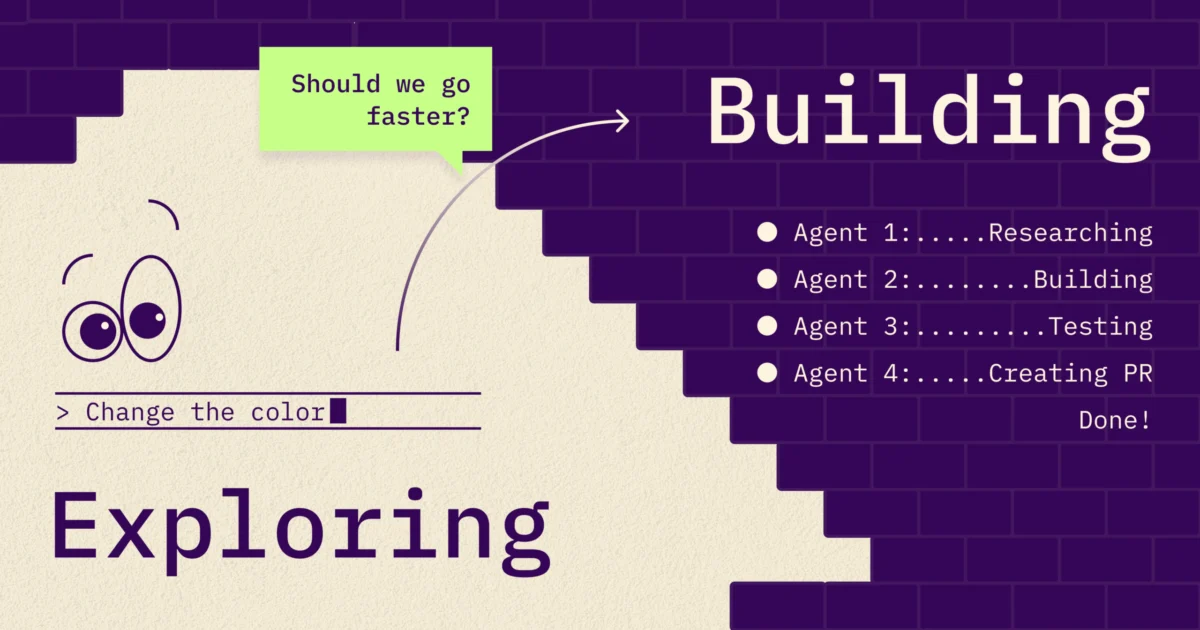
Fresh from attending PUSH UX in Munich—Europe’s largest conference on product design and user experience, which drew prominent speakers from companies like Anthropic, Wise, Google, IKEA, and n8n—one dominant, recurring theme has lingered: product design teams are approaching artificial intelligence from fundamentally different, and sometimes opposing, perspectives.
The industry is currently caught in a profound transition. On one side, some teams are cautiously experimenting with AI tools, attempting to fit novel capabilities into long-established, traditional workflows. On the other side, forward-thinking teams have already deeply integrated AI into their day-to-day operations, seamlessly connecting user research, interactive prototyping, visual design, and software engineering with significantly fewer handoffs and operational bottlenecks.
This growing divide goes far beyond simple tool adoption or preference for a specific software suite. Instead, it reflects a much deeper shift in how product organizations understand their core work, organize cross-functional collaboration, and measure the ultimate value of the digital products they build.
The Trap of "AI Everything"
During his keynote session at the conference, Paulo Oliveira, Global Innovation and Technology Manager at IKEA, highlighted a fundamental strategic misstep that many modern organizations make when approaching artificial intelligence.
"Most efforts start with tools, copilots, and automation, and mistake faster cycles for value," Oliveira pointed out. "The result is a pile of pilots nobody adopted, and a lot of people wondering what happened to the work they were good at. The alternative: to build something that fits, lasts, and makes an organization better at what it already does well. That starts by refusing the AI first, AI everything instinct."
This observation captures one of the central operational challenges facing product design today. Simply adding artificial intelligence capabilities to an existing workflow can often make individual tasks run faster without actually improving the quality of the end product or enhancing the way a team operates. Organizations can easily accumulate a bloated stack of tools and isolated experiments while leaving their underlying processes and cross-functional silos completely unchanged.

Meaningful, lasting adoption does not start with a rush to buy the latest copilot subscription. Rather, it starts with a careful audit of where teams habitually lose time, which handoffs create unnecessary friction, and precisely where AI can genuinely improve how products are researched, designed, built, and validated.
Expanding Designer Ownership
For years, the software industry maintained a rigid boundary between product design and software development. These functions operated as distinct, sequential stages in a product lifecycle. Designers worked primarily within platforms like Figma, documented complex user interactions, prepared exhaustive interface specifications, and ultimately handed their polished work over to software engineers for actual implementation.
Historically, this strict division made absolute sense. Building, testing, and maintaining functional software interfaces required substantial engineering resources and specialized coding skills. However, the rise of modern, AI-assisted development tools is rapidly changing that traditional relationship.
After spending years designing complex fintech and blockchain-based products, many designers have repeatedly encountered the same frustrating limitation: the inability to maintain full control over how an intended experience is actually implemented in production code. Over the past year, however, a shift has begun. Many practitioners have started building complete websites and applications entirely from scratch using advanced AI coding assistants. For some, workflows have shifted dramatically from spending nearly all their time in design tools to spending the vast majority of their time working directly in codebases alongside AI.
Working much closer to production code allows designers to build, test, and iterate on user interfaces directly, cutting out the traditional lag time and miscommunication inherent in handoffs between design and engineering departments.
Crucially, this evolution does not mean that every product designer must suddenly become a full-time software engineer. Deep specialization remains exceptionally valuable, particularly when building highly complex, enterprise-grade software products. However, modern AI tools enable designers to work much closer to implementation and contribute meaningfully far beyond the traditional, narrow boundaries of their historical roles.

Another exciting area undergoing transformation is prototyping. Creating high-fidelity, highly interactive prototypes for specialized hardware devices—such as an Apple Watch or an advanced in-car infotainment system—was previously a tedious and difficult undertaking. Today, even without writing traditional production code from scratch, designers can leverage AI to build interactive, contextual prototypes tailored specifically to unique hardware constraints, allowing them to explore how their interface concepts function in realistic, real-world environments.
From Faster Execution to Lasting Value
As artificial intelligence makes prototyping, coding, and exploring alternative solutions significantly easier, the core focus of product design work is naturally shifting away from purely mechanical execution and toward high-level decision-making and product quality. Understanding whether a feature actually solves the right user problem, fulfills genuine customer needs, and operates reliably under pressure requires seasoned experience, strategic thinking, and critical human judgment.
Julia Bastian, Product AI Lead at Alasco, addressed this exact dynamic during her session at PUSH UX, which focused heavily on the emerging phenomenon of "AI discovery slop." Bastian examined the risks of relying too heavily on AI-generated research without human oversight, exploring how teams can recognize and effectively address low-quality, generic AI insights.
As Bastian and other industry leaders noted, AI-assisted research and discovery can frequently produce shallow or generic results, particularly when practitioners rely on automated outputs without applying their own domain expertise and critical faculties. The ultimate quality of any design or research outcome depends heavily on how thoughtfully human beings guide, evaluate, and refine the underlying process.
When harnessed correctly, however, faster workflows can create lasting organizational value. Teams gain significantly more opportunities to test foundational assumptions, explore alternative design directions, and identify potential flaws long before committing substantial financial and engineering resources to a final solution. Yet, individual productivity gains alone are not enough. Modern organizations must intentionally connect design, engineering, and product management around shared workflows, rigorous quality standards, and meaningful methods for evaluating AI-generated output.
Building an AI-first product culture requires striking a delicate balance: encouraging rapid experimentation and creative exploration while simultaneously maintaining the technical rigor, data security, and high reliability that complex technology products demand. While skeptics often argue that AI-generated product experiences inherently lack craftsmanship and quality, the reality is more nuanced. While early results can sometimes be lackluster, thoughtful human guidance ensures that the outcomes steadily improve.

Looking Ahead
The discussions and presentations at PUSH UX reinforced just how varied the global design community’s response to artificial intelligence continues to be. While some product teams are still finding their footing and evaluating where automation fits, others have already fundamentally reorganized their daily operations.
For many practitioners, working across the traditional boundaries of design, product strategy, and engineering is becoming the new normal, though every individual team will ultimately need to forge an approach that suits its unique culture and market demands.
The most vital takeaway for the industry is the necessity of critically reevaluating established workflows, exploring precisely where new capabilities can drive real impact, and taking greater, more holistic ownership of overall business outcomes. As these tools continue to evolve, the distinction between designing an experience and building it will likely continue to blur, opening up new possibilities for the future of digital product development.


Comments (0)