


It has been roughly a year since a decisive shift began taking place in the active investment landscape surrounding semiconductors. Back in August 2025, early warnings regarding severe compute shortages proved to be entirely accurate. By September of that same year, RAM shortages materialized with sudden force, sending semiconductor equities on a parabolic run. Investors who began migrating capital away from volatile crypto assets and into the hardware powering the artificial intelligence revolution watched virtually every recommended name double in value by November.
Refining this thesis over subsequent months, market participants taking a concentrated stance have narrowed their focus down to an elite trio of memory giants: SK Hynix, SanDisk, and Micron. While options trading around peripheral semiconductor names remains common, the deepest conviction in the hardware ecosystem centers squarely on memory. Despite many of these equities surging anywhere from 250% to 1,000% over the past year alone, market observers argue that the trade is far from crowded and that investors are still early.
While the broader public fixates on popular artificial intelligence tickers, wondering whether they have missed the boat or struggling with asset allocation, the definitive answer points overwhelmingly toward memory. Experience continues to demonstrate that memory remains the single largest play that Wall Street fundamentally misunderstands.

To understand the mechanics of the memory trade, one must begin with the technology itself. In the race to scale artificial intelligence, public attention typically fixates on the models and the need for powerful graphics processing units, or GPUs, to handle massive computations. While processing power is vital, a crucial component is frequently overlooked: the scale of these computations must be held actively in the computer’s operational workspace, much like a human performing complex mental math and carrying digits over in their head.
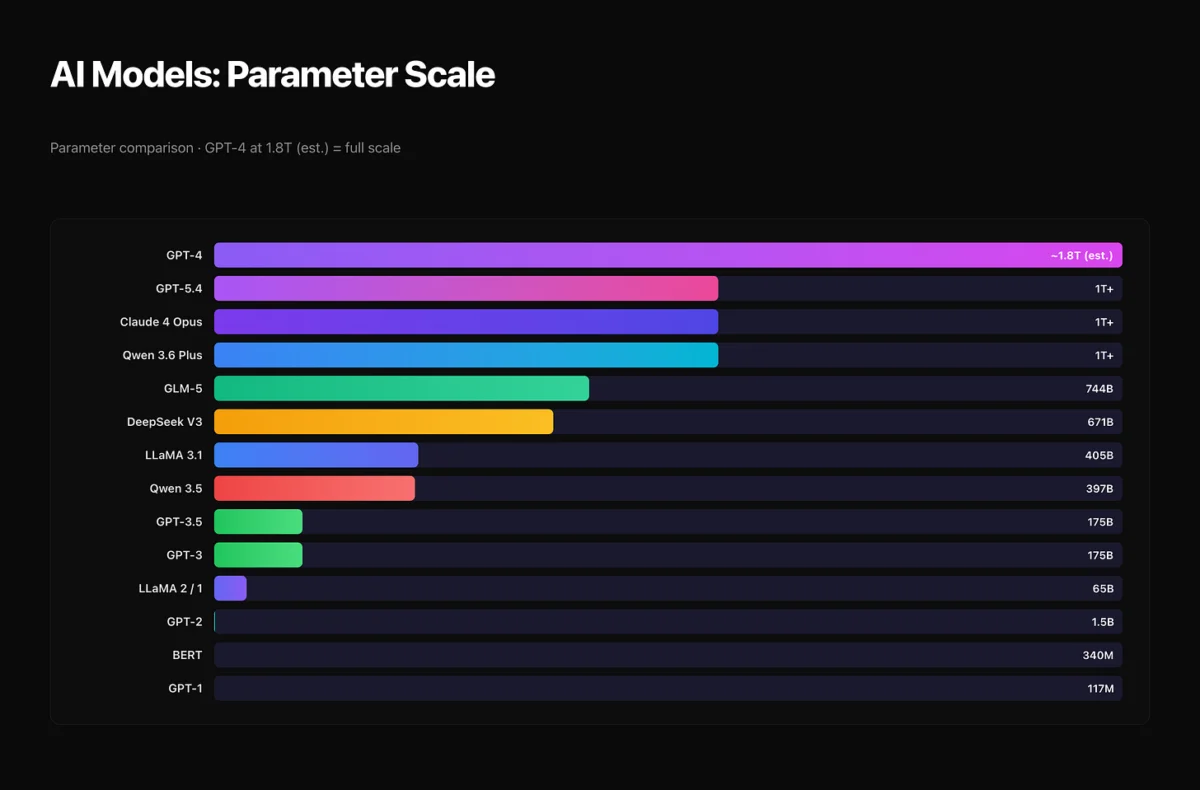
Accomplishing this feat requires immense processing power paired with massive, high-speed memory reserves. When examining modern AI models, they are typically classified by their parameter counts. More capable models naturally feature higher parameter counts. While algorithmic efficiencies allow smaller models to punch above their weight, larger parameter models unlock unprecedented tiers of capability. In the current technological landscape, being memory-poor means facing severe limitations, preventing users from running desired models or providing them with sufficient context windows.
Both execution capability and context capacity are extraordinarily important. Succeeding in the AI space is less about how many calculations can be performed simultaneously and more about how many calculations can be executed coherently toward a singular outcome. Simply put, higher-parameter models require exponentially more memory.
Without delving into complex quantization methods and assuming a standard FP16 baseline, roughly 2GB of VRAM—GPU memory—is required for every one billion parameters. Running a massive model like GPT 5.4 on consumer hardware, for instance, would demand an impossible two terabytes of VRAM, rendering it entirely inaccessible due to prohibitive costs and physical limitations. Even smaller variants, such as a 35-parameter model running locally, require roughly 70GB of VRAM, easily exhausting the limits of high-end commercial workstations outfitted with specialized hardware. Deploying frontier models like GLM 5.1 or Kimi K2.5 requires anywhere from 400GB to 600GB of VRAM, necessitating multi-GPU clusters housed in high-end servers valued well into the hundreds of thousands of dollars.

Furthermore, active AI sessions demand substantial memory overhead. While standard context windows fill up rapidly during intensive coding or data analysis sessions, advanced workflows require expanded context windows to maintain utility. As users push these models to handle more complex tasks, the underlying hardware requirement remains constant: greater utility demands drastically more memory.
Without memory, high-end GPUs are functionally useless for inference workloads. Yet, despite this indispensable role in the modern infrastructure buildout, public markets have demonstrated a persistent blind spot toward the memory sector.
Analyzing the sub-sectors of the artificial intelligence trade reveals a curious valuation disconnect. The broader ecosystem relies on the exact same underlying demand cycle. It is impossible, for example, to witness massive deployments of NVIDIA GPUs without a corresponding surge in memory sales. Yet, while infrastructure support providers like Vertiv trade at elevated forward price-to-earnings multiples based on robust future AI demand, key hardware providers trade at significantly lower valuations. For every NVIDIA processor deployed, massive quantities of high-bandwidth memory must accompany it—memory that can only be sourced from a very limited group of global manufacturers, namely Micron, SK Hynix, and Samsung.
The core of the market disconnect lies in persistent historical biases. Average market participants often evaluate memory through the lens of cyclical commodities, operating under the assumption that the sector is bound to experience a severe crash reminiscent of past downturns. Historically, memory makers have expanded capital expenditures during booms, triggered oversupply when consumer demand softened, experienced collapsing spot prices, and subsequently consolidated until the cycle repeated.

However, labeling memory as a simple commodity cyclical industry is intellectually lazy. A structural shift has fundamentally altered the demand profile. Historically, dynamic random-access memory demand was closely tied to consumer electronics, cell phones, and personal computers. A watershed moment occurred when server demand surpassed consumer mobile applications, shifting the epicenter of DRAM demand toward enterprise data centers and high-performance computing.
Furthermore, DRAM has evolved into distinct product lines, split between traditional Double Data Rate memory and High Bandwidth Memory. While standard DDR sticks remain modular and interchangeable, HBM is physically integrated directly onto the GPU package itself. Every high-performance AI accelerator shipped today requires dedicated HBM integration.
For the past two decades, memory served traditional computing use cases that rarely required ultra-fast data transfer speeds. Today, however, high-performance computing and artificial intelligence workloads are fundamentally throttled by bandwidth constraints. These systems are heavily memory-bound, representing a critical structural break from historical norms.
Those forecasting a crash in memory prices must logically believe that global artificial intelligence demand will fall off a cliff. Skeptics point to limited daily chatbot usage among casual users, but for power users and enterprise operations, large language models have enabled unprecedented productivity gains across expanded operational surfaces. The economic value generated by these systems is undeniable, justifying the massive capital expenditures poured into their deployment.

The financial upside remaining in the sector is substantial. Conservative forward-looking estimates project SK Hynix to generate historic profits, with bullish forecasts pointing even higher, valuing the dominant memory producer at a remarkably low multiple of its projected earnings. Similar dynamics apply to Micron, a company long subject to Wall Street skepticism, which is projected to secure robust earnings figures comparable to leading technology conglomerates, yet continues to trade at depressed valuation multiples due to lingering fears of cyclicality.
Even if macroeconomic headwinds were to temper market enthusiasm, memory manufacturers have insulated their operations by locking in multi-year Long Term Agreements with major enterprise customers. Industry executives across corporate earnings calls consistently report that production capacity is effectively sold out well into the future, pushing potential supply normalization windows out toward the end of the decade.
While spot prices have climbed significantly over recent quarters, the broader market cycle has considerable room to run. As manufacturers maintain disciplined capital expenditure policies to avoid historical oversupply traps, persistent shortages are likely to endure. With emerging technological frontiers like autonomous robotics, advanced image synthesis, and real-time video generation all exhibiting extreme memory sensitivity, the secular demand wave supporting the semiconductor memory sector remains firmly intact.

Comments (0)