


When author and technologist Kevin Kelly met Google co-founder Larry Page at a party back in 2002, he found himself wrestling with a fundamental economic paradox that many early internet observers shared. Why, he wondered, would anyone invest capital, time, and engineering prowess into building a company centered around offering its core product entirely for free?
Recalling the interaction, Kelly admitted he simply did not understand the business model at the time. There were numerous competing search companies, and the notion of providing web search at zero cost to the consumer seemed financially unsustainable. He pressed Page on where such a strategy could possibly lead, asking directly where it gets you.
Page’s response was as memorable as it was prophetic, cutting straight through the commercial confusion with a stark revelation: “Oh, we’re really making an AI.”

That brief exchange occurred two years before the launch of Facebook, three years before the debut of YouTube, five years before the introduction of the iPhone, and an astonishing two decades before the public release of ChatGPT thrust generative artificial intelligence into the global mainstream. For Kelly, the conversation served as a profound intellectual awakening.
Writing in his 2016 book The Inevitable, Kelly reflected on the true mechanics underlying the search giant’s rapid ascendance. Rather than using artificial intelligence merely to make its search engine better, he observed, Google was doing the exact opposite. It was using search to make its artificial intelligence better. Every single time a user typed a query, clicked on a search-generated link, or created a new connection on the web, they were actively training Google’s underlying AI systems.
History has largely validated Kelly’s assessment. Utilizing billions of human interactions to train machine learning models proved far more consequential, transformative, and lucrative than merely serving targeted web advertisements. Yet, looking back from the vantage point of the mid-2020s, technology analysts and economists suggest that the realization goes even deeper. The true, foundational purpose of the entire internet was never primarily about human communication, commerce, or entertainment; its ultimate destiny was to serve as the training ground for artificial intelligence.
That perspective has found a prominent voice in economist Alex Tabarrok. In a recent discussion with economist Tyler Cowen, Tabarrok argued that history will ultimately remember the internet primarily as the nutrient-rich petri dish from which artificial intelligence sprang. Cowen echoed this sentiment, noting that society is only just beginning to grasp this monumental realization. When future generations look back and ask what the internet truly was, Tabarrok suggested, they will realize that putting everything online was done for the benefit of the AI. It was never really for us, even if human users were entirely unaware of the grand design at the time.
Except, of course, for Larry Page. And perhaps his father, who was an early pioneer in artificial intelligence research. And alongside Page, his co-founder Sergey Brin, a machine-learning expert deeply versed in the theoretical and practical foundations of AI, who has even contributed code directly to Google’s modern large language models, including Gemini.
None of these foundational figures captured the cover of Time Magazine as an designated “architect of AI,” yet their original vision for search executed precisely what they had intended from the outset.
Years earlier, in a recorded presentation from 2000, Page laid out the ultimate ambition of their work with striking clarity. The goal of the ultimate search engine, he explained, would be to understand everything on the web. It would understand precisely what a user wanted and deliver the exact right answer. That capability, he noted, is obviously artificial intelligence—the capacity to answer any conceivable question because virtually all human knowledge is indexed on the web.
And who put that knowledge there? The users did, through years of digital participation.
Kelly elaborated on this mechanism in his 2016 writings, pointing out that simple user habits—such as typing a query into an image search bar and clicking on the most accurate visual result—were effectively teaching machines fundamental concepts about the physical and cultural world. Each of the billions of daily queries conducted across the web tutored deep learning systems repeatedly. Today, that daily volume has escalated to an estimated 16 billion queries per day on Google alone, continuously refining modern computational models.
This reality reframes the narrative of digital history. In a literal sense, everyday internet users deserve recognition for the countless hours of data labeling, browsing, clicking, and content creation they have contributed over the decades.
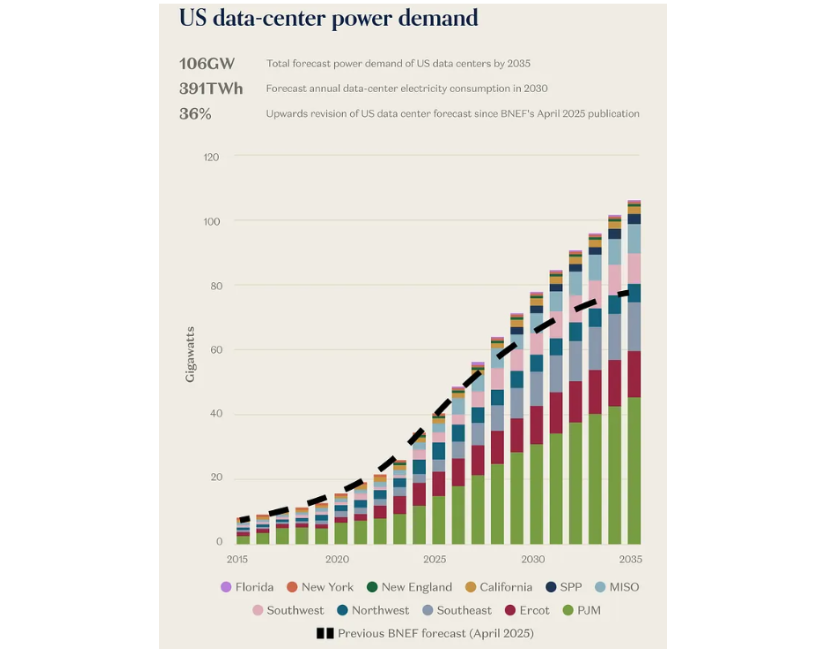
Meanwhile, the relentless expansion of artificial intelligence continues to reshape global infrastructure, economics, and financial markets, introducing new pressures and challenges across multiple sectors. Recent industry data compiled by firms like a16z illustrates that forecasts for data center power consumption have surged by over a third in a remarkably short span. Technology stocks have frequently faced downward pressure not from a lack of demand, but from the stark physical bottleneck of securing sufficient electrical power to run the massive data centers required to train and deploy advanced models.
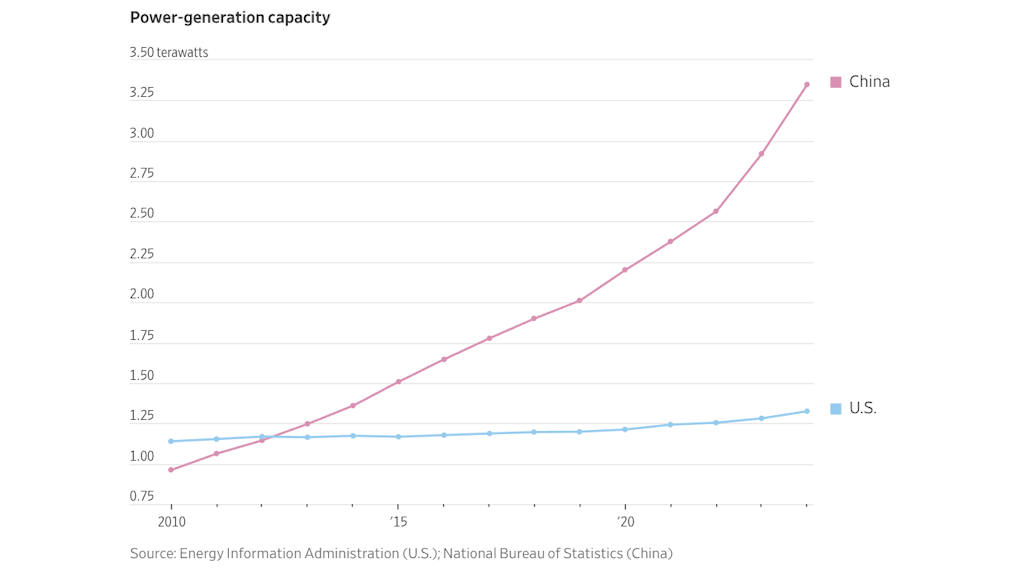
This race for computational supremacy also highlights geopolitical shifts. Observers note that China’s strategic advantage in the race toward artificial general intelligence is heavily bolstered by its immense energy production capabilities, with projections indicating it will soon generate vastly more power than the United States.
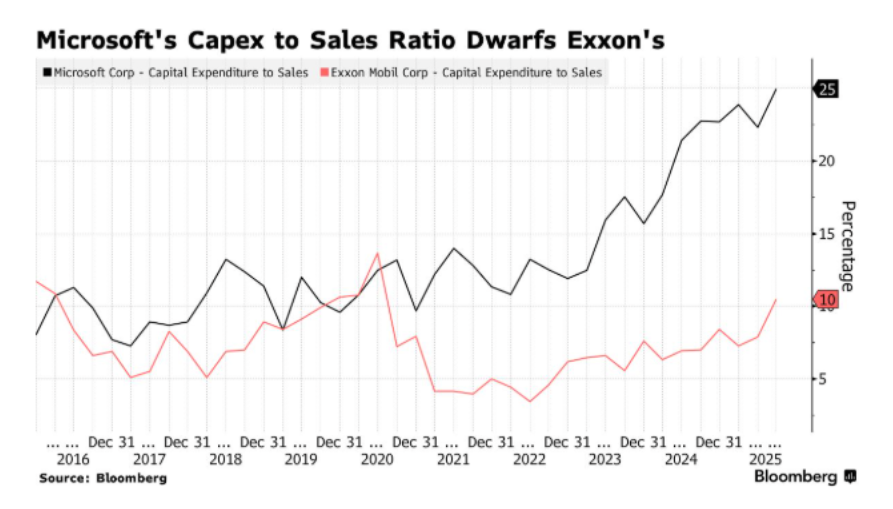
The financial markets are reflecting these sweeping structural shifts in unexpected ways. Traditional investing paradigms are undergoing a historic role reversal. Tech giants like Microsoft, traditionally operating as asset-light software businesses, are now spending more than double the percentage of their sales on capital expenditures compared to legacy asset-heavy commodities giants like Exxon.
At the same time, shifting consumer behaviors and demographic realities continue to influence modern economic life. Recent regulatory and demographic discussions highlight profound global changes. For instance, demographic data from nations like South Korea underscores severe birth rate declines, projecting stark generational shifts where future populations will rely heavily on automated systems and artificial intelligence to sustain economic productivity.
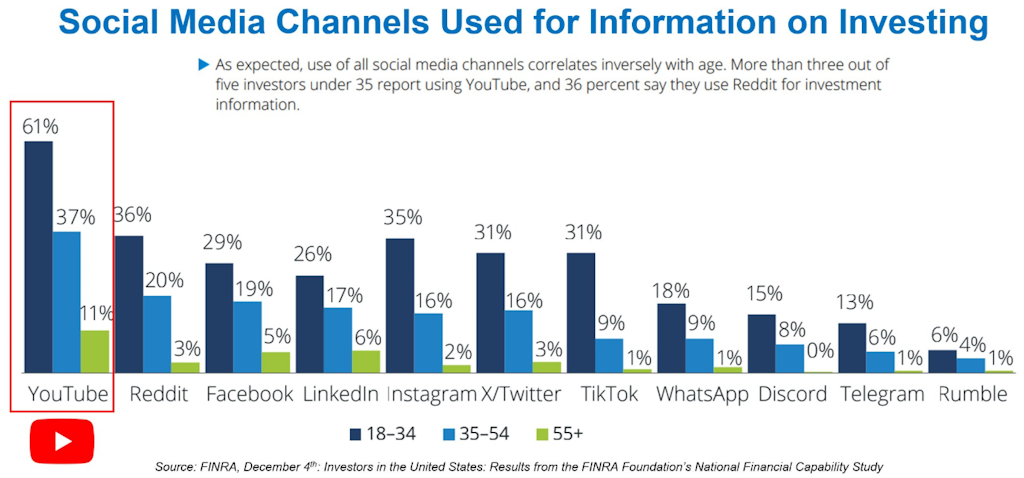
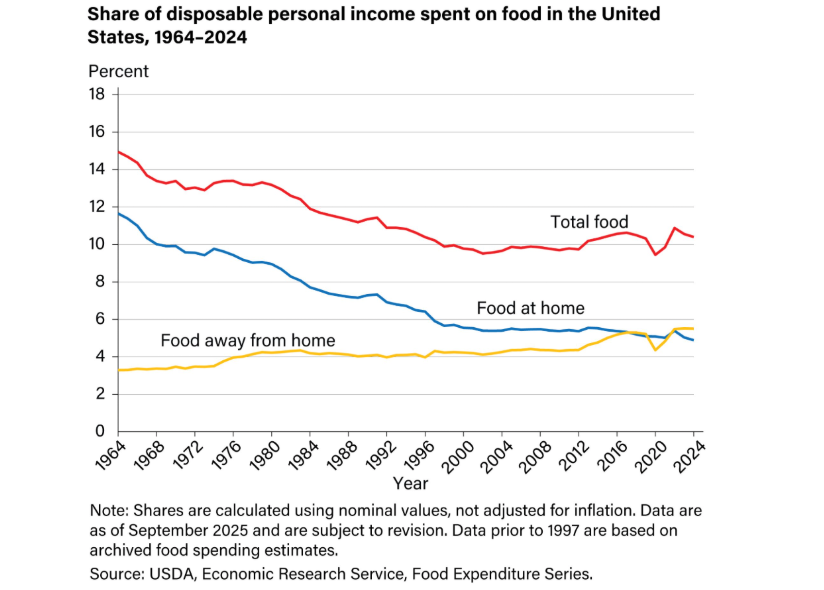
At the intersection of technology, finance, and culture, everyday habits are evolving as well. Recent financial industry surveys indicate that a significant majority of younger investors rely on video platforms like YouTube for financial guidance, illustrating how digital media platforms have replaced traditional advisory channels for a new generation. Yet, despite widespread public anxieties regarding the cost of living, broader economic data suggests that consumer food budgets as a percentage of disposable income have stabilized, even as modern consumption patterns shift toward convenience and prepared goods.
Ultimately, these interconnected trends point back to the central thesis of the digital age. When Time Magazine famously named "You" as Person of the Year in 2006, recognizing the individual content creators populating the world wide web with blogs, videos, and comments, it captured a pivotal moment of participatory culture. In hindsight, everyday internet users arguably earned a permanent place among the architects of the modern technological landscape. Without the massive repository of human knowledge and digital interaction generated over the past thirty years, the current generation of artificial intelligence would have had no foundation upon which to build.





Comments (0)