


As Wall Street and technology markets increasingly debate whether the massive capital expenditures pouring into artificial intelligence represent an unsustainable bubble and
an overbuilding of physical infrastructure, a new comprehensive analysis pushes back sharply against the consensus. In a newly published, extensive essay titled "Silicon Control," author and analyst Kerman Kohli argues that the prevailing market anxiety is fundamentally mistaken, projecting instead that the global tech ecosystem faces a prolonged, decade-long journey of being severely supply constrained.
The nearly 9,000-word analysis tackles the core assumptions underpinning current bearish sentiment regarding data centers, semiconductor fabrication, and energy consumption. While skeptics frequently point to the staggering billions of dollars being spent by hyperscalers, cloud providers, and enterprise tech giants on advanced graphics processing units, specialized chips, and power-hungry server farms as a classic overexpansion cycle, Kohli posits that demand parameters are evolving at a pace that infrastructure growth will struggle to match for the foreseeable future. Rather than a looming glut of compute power, the structural reality of the market is one defined by enduring bottlenecks across the entire value chain.
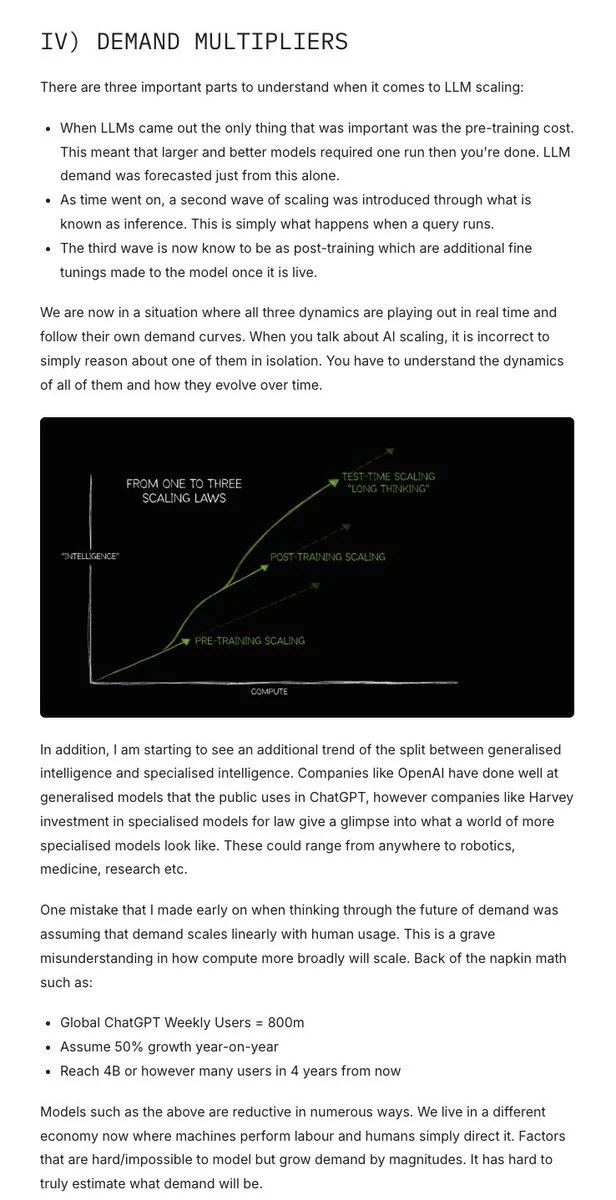
Central to the thesis presented in "Silicon Control" is the underlying case for what the essay terms "infinite compute." In traditional economic cycles, capital investments in industrial capacity eventually catch up to and surpass market demand, leading to cyclical downturns, inventory gluts, and price compression. However, Kohli contends that artificial intelligence represents a paradigm shift where computational demand is not static or bound by traditional enterprise software metrics. Instead, as AI models grow more sophisticated, autonomous agent systems multiply, and enterprises integrate machine intelligence into every facet of operations, the appetite for raw compute scales exponentially. The essay examines the specific mechanisms through which this demand will continue to expand from current baselines, refuting the notion that current adoption rates are nearing a saturation point.
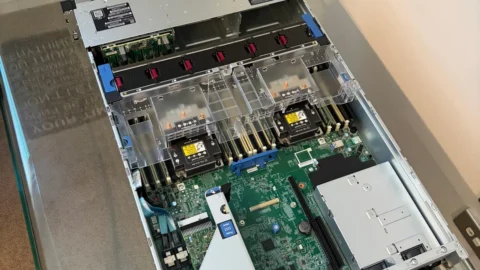
A significant portion of the analysis is dedicated to dismantling common misconceptions held by investors and market observers regarding the global semiconductor and technology supply chain. The path from raw silicon to deployed artificial intelligence clusters involves a hyper-specialized, highly concentrated ecosystem spanning semiconductor design, extreme ultraviolet lithography, advanced packaging, specialized memory, high-voltage power grids, and specialized cooling infrastructure. According to the essay, many market participants fail to appreciate the sheer physical, technical, and geopolitical friction involved in scaling these chokepoints. Rather than an easily rectifiable overbuild, the physical limits of manufacturing advanced nodes and the intricate dependencies across a handful of key global players mean that supply adjustments cannot happen overnight.
These dynamics point toward a striking structural outcome for the global economy over the coming years. The essay projects that the future of the technology landscape will consolidate into what can be described as a silicon monopoly, consisting of fewer than twenty companies holding ultimate control over the hardware foundation of the modern digital world. This extreme concentration of power highlights the high-stakes nature of the current infrastructure race, where missing out on supply allocation poses a far greater existential threat to major enterprises and nation-states than the financial risk of overspending.
The publication of "Silicon Control" has already begun generating considerable discussion across social media and professional technology forums, drawing tens of thousands of views and sparking debate among market analysts, venture capitalists, and industry engineers. By directly challenging the prevailing narrative of an impending AI bust, the essay forces a reevaluation of how capital markets measure risk, capacity, and long-term growth in the age of accelerated machine intelligence. As tech leaders continue to commit unprecedented resources to building out the next generation of computing infrastructure, analyses like Kohli’s underscore the possibility that the current boom may not be an excess of optimism, but rather the early stages of a profound and enduring structural scarcity.

Comments (0)