


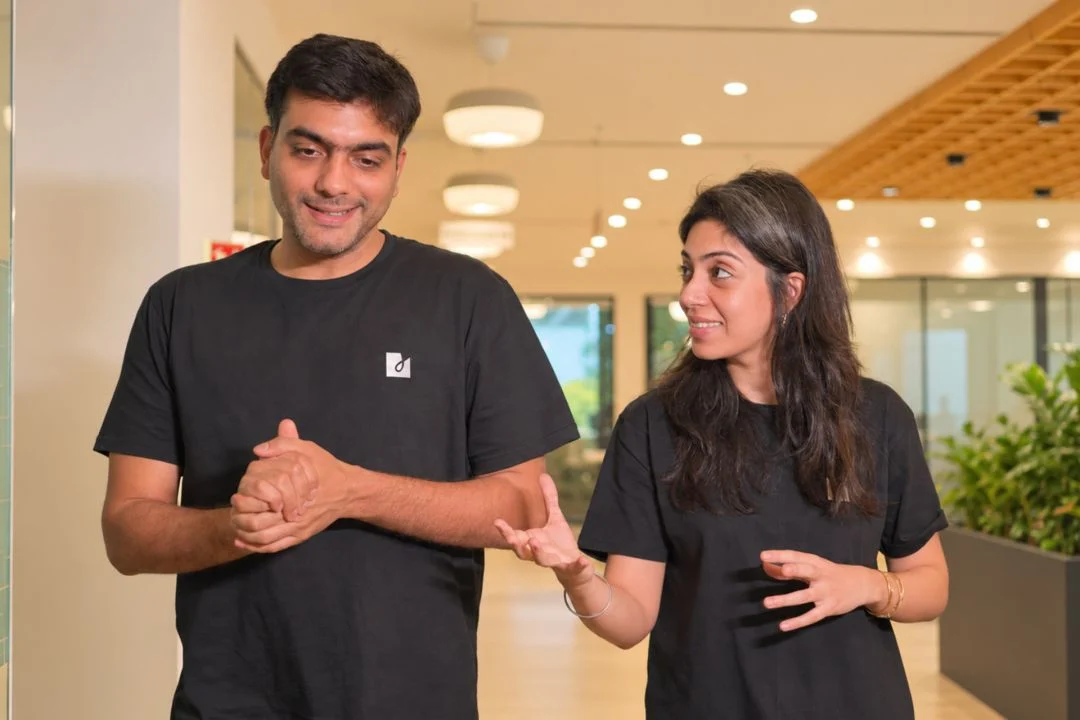
Bharat Semi, an ambitious Indian semiconductor startup aiming to carve out a major space for itself in the global hardware market, has successfully raised $24 million in an all-equity seed round. The fresh capital infusion is earmarked for the continued development of the company’s specialized, AI-enabled image sensors as it aggressively pursues enterprise customers across the United States and international territories.
The significant financial backing arrives at a pivotal juncture for the nearly five-year-old, pre-revenue enterprise. Bharat Semi has already achieved notable validation by securing design wins with prominent U.S. defense technology contractor General Atomics and Indian industrial partner Kaynes Semicon. Despite these early commercial milestones, the startup’s core image sensors remain under active development, with initial commercial production targeted for 2027.
The investment underscores a broader geopolitical and economic shift within the technology sector. India has committed billions of dollars in public capital and incentives to build up a domestic semiconductor manufacturing and design ecosystem, harboring ambitions to emerge as a viable alternative manufacturing hub as Western companies increasingly seek to diversify their supply chains away from China. While India is still working to establish itself as a heavyweight chip-manufacturing destination, the global artificial intelligence boom is simultaneously granting specialized Indian startups like Bharat Semi a unique window of opportunity to design and deliver sophisticated, niche chips directly to global markets.
Operating out of New Delhi, Bharat Semi is designing programmable image sensors that cleverly integrate image capture, data processing, and artificial intelligence capabilities onto a single silicon chip. This streamlined architectural approach drastically reduces the traditional need to offload visual data to separate processors. According to co-founder Vrinda Kapoor, this technological leap could potentially cut system costs by at least 70% compared with conventional hardware setups that typically require a standalone image sensor, an image signal processor, and a separate system-on-chip working in tandem.
"Our aim here is to move from sensors to sense-making solutions," Kapoor explained in an interview.
Kapoor, a South Park Commons fellow with a professional background in healthcare technology, co-founded Bharat Semi in late 2021. She launched the venture alongside Vinayak Dalmia, the startup’s managing director, whose professional resume includes stints at McKinsey and in the private equity sector. To bolster its technical prowess, the company appointed Boyd Fowler as its chief technology officer. Fowler previously served in the exact same executive role at prominent image-sensor maker OmniVision, lending deep industry credibility to Bharat Semi’s technical roadmap.
The startup’s advanced sensors are intentionally designed to target a wide array of high-growth vertical markets, including smart homes, industrial automation, surveillance systems, and aerospace applications. Without disclosing proprietary client specifics, Kapoor offered illustrative examples of how the technology could function in everyday scenarios. These include smart air conditioning units capable of autonomously detecting when a room is completely empty to adjust climate controls, and intelligent drones capable of processing complex visual information directly on board, even in the absence of more expensive, power-hungry computing hardware elsewhere in the system.
Development on the hardware front is progressing systematically. Bharat Semi’s first-generation sensors are already moving through the prototyping phase. Meanwhile, the startup’s second-generation sensors, which are designed to incorporate much more advanced on-chip AI capabilities, are expected to reach the crucial prototype stage by mid-2027. Furthermore, the company maintains an aggressive timeline to get these newer, highly capable sensors directly into the hands of prospective customers by the end of 2027.
The lucrative seed funding round was co-led by Info Edge Group, South Park Commons, and Indus Bridge Ventures. Additional financial participation came from Valour Capital, Micromax, Gaingels, and a roster of individual angel investors. Kapoor noted that Bharat Semi plans to deploy the capital injection toward scaling up its specialized engineering workforce, finalizing complex product development cycles, and successfully bringing its innovative sensors to a competitive global market.
At present, Bharat Semi maintains a distributed operational footprint with approximately 75 total employees split between India and the United States. This includes a small, focused team of 10 to 12 personnel managing engineering and business development operations out of Santa Clara, California. The startup intends to nearly double its U.S. headcount to approximately 20 employees by mid-2027. In addition to its North American expansion, the company has also initiated the recruitment of specialized engineering talent in Europe to support its long-term global ambitions.
"It’s a story of can we build a global technology company out of India," Kapoor reflected.
Beyond its core image-sensor business, Bharat Semi has previously made waves with broader infrastructure ambitions. In 2024, the startup announced high-level plans for a major semiconductor fabrication project in India, a venture anchored by a technology partnership with the U.S. Space Force. Kapoor clarified that this initiative remains in active development, with the company currently working to identify and onboard capable domestic industrial partners who would ultimately build and operate the physical fabrication facility.
Crucially, Kapoor emphasized that the fabrication project is entirely separate from Bharat Semi’s core image-sensor business. The startup intends to remain strictly fabless, outsourcing the physical manufacturing of its chips to dedicated foundries while concentrating its internal resources on cutting-edge semiconductor design and specialized software development. She confirmed that the newly secured seed capital will not be utilized to finance the proposed fabrication facility.


Comments (0)