



Amid recent market volatility that has knocked semiconductor, artificial intelligence, and momentum-driven stocks 30 to 40 percent below their all-time highs, Wall Street and technology investors are sharply divided over the sector’s future. While a vocal segment of the market is quick to declare a definitive top for semiconductors, artificial intelligence, and memory hardware—claiming victory for staying on the sidelines—industry analysts and market observers suggest that such celebrations are premature.
At the core of the ongoing debate surrounding the semiconductor and AI investment thesis lies a fundamental question: Is the demand for compute finite or infinite?

In many investor conversations, market participants fall into the trap of extrapolating local, micro-level experiences of enterprise software usage and adoption onto the broader global market. While it is true that enterprise adoption cycles for artificial intelligence can be slow, measured, and heavily scrutinized, this friction creates a powerful counter-incentive. Smaller, agile, AI-native firms are increasingly positioned to outcompete legacy corporations by operating with a fraction of the workforce. When used effectively, artificial intelligence can prove vastly cheaper and more efficient than traditional human scaling, altering the competitive landscape.
Zooming out beyond corporate enterprise software capital expenditures reveals that the broader AI buildout is ultimately about bringing raw compute online. This infrastructure is utilized by a diverse ecosystem of buyers, including sovereign governments, hyperscalers, major research laboratories, and automated robotics systems. Each of these market segments operates with a vastly different willingness to pay for compute resources.

While certain buyers may tap out or reevaluate their budgets as the cost of compute fluctuates, the global market continues to find buyers with higher capital allocations. For critical entities such as sovereign nations and hyperscale cloud providers, compute spend is non-negotiable in a high-stakes geopolitical and commercial race. For others, computational power serves as a direct, cost-effective replacement for human labor overhead. Believing that the market will overbuild or surpass capacity implies that these groups will eventually reach a state of complete satisfaction, an assumption that treats intelligence as a static commodity rather than an engine for continuous economic growth.
The debate over hyperscaler capital expenditure remains one of the most contentious topics among institutional investors. Critics frequently question whether massive cloud providers are risking their long-term financial health by pouring unprecedented amounts of free cash flow into data center infrastructure and advanced hardware. However, a closer examination of public cloud economics reveals a different reality. Public cloud offerings are priced at significant premiums, with providers extracting maximum value from corporate clients who have grown dependent on their ecosystems.

Cloud giants have successfully convinced generations of businesses that scaling is impossible without their proprietary infrastructure, routinely marking up non-CPU compute costs by substantial margins while layering on additional fees for data transfers, logs, and auxiliary services. This lock-in dynamic creates a high barrier to exit, making a lack of available compute an existential threat to cloud providers. When tenants maintain their data and workloads within a specific cloud ecosystem, running out of graphics processing units is unacceptable, as it risks driving customers directly into the arms of competitors. Consequently, hyperscalers maintain immense pricing power, allowing them to dictate terms while their tenants remain largely divorced from bare-metal hardware realities.
Financial comparisons between renting cloud infrastructure and purchasing dedicated hardware highlight the massive margins enjoyed by cloud operators. For instance, high-end AI inference and training servers that can be assembled independently for a fixed capital outlay command steep monthly rental fees on major cloud platforms like Google Cloud, translating into rapid payback periods of under two years for cloud providers even after accounting for high utilization rates. Furthermore, older generation graphics processing units are demonstrating remarkable value retention, with rental costs and secondary market values defying traditional depreciation models. As memory costs rise to compensate for hardware efficiencies, the return on investment for infrastructure capital expenditures appears significantly higher than many market skeptics anticipate.

Market sentiment regarding hyperscale credit risk has also shown signs of overreaction. When spot pricing for renting GPU compute significantly exceeds long-term contracted rates, it often signals that hyperscalers are actually underearning relative to market demand, while accelerating operating cash flows provide an underestimated internal source of funding for ongoing AI expansion. Industry data underscores this dynamic, with estimated demand backlogs climbing significantly over a relatively short period. While frontier labs represent a substantial portion of global compute consumption, demand is increasingly diversified across a widening array of enterprise, governmental, and specialized applications.
The divergence in market perspective is further compounded by the unique economic characteristics of artificial intelligence compared to previous technological revolutions. Past infrastructure buildouts, such as the expansion of railroads or the commercialization of the internet, relied heavily on human adoption rates and physical diffusion through the economy. Artificial intelligence, by contrast, exhibits recursive demand, where compute can actively generate its own subsequent demand for computational power. Because the utility of artificial intelligence scales with autonomous capability, an organization or individual that discovers a positive return on investment can continuously reinvest in compute, transforming capital expenditure into a self-sustaining revenue engine.

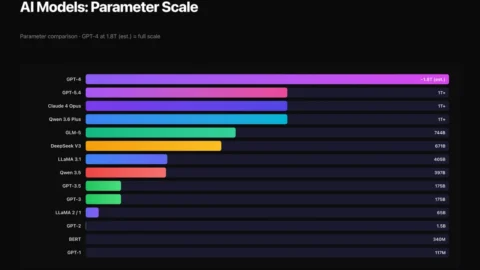
Evaluating the demand for model training and inference reveals distinct market pressures. State-of-the-art frontier models require substantial upfront capital investments, creating valuable intellectual property and specialized capabilities that command a premium for complex workloads. Although open-source models continue to proliferate and offer cost-effective alternatives, running the largest state-of-the-art models requires massive memory footprints and specialized hardware infrastructure that outstrips standard consumer setups. Even as open-source ecosystems expand, the underlying models still require massive physical hardware capacity to serve users at scale, ensuring that hardware demand remains robust regardless of proprietary software shifts.
Inference workloads continue to demonstrate healthy margins for serving providers, and as end-users increasingly deploy dedicated local hardware, the underlying demand for semiconductors outstrips available manufacturing supply. Despite periodic market sell-offs driven by temporary headlines or shifting sentiment toward specific model releases, major technology companies continue to report rising revenues and active user bases that contradict narratives of a hollow speculative bubble.

Ultimately, the artificial intelligence trade remains uniquely polarized, viewed simultaneously as an unprecedented technological revolution and an overextended speculative frenzy. Traditional economic models dictate that surging demand will eventually be met by an influx of supply. However, because the fundamental inputs of power, silicon, and land feed into a wildcard output of scalable intelligence, the global appetite for compute appears structurally unbounded. As industries look toward the next wave of automation, including widespread robotics integration and demographic shifts, the imperative to bring more compute online remains absolute, setting the stage for a prolonged transformation of the global economy.


Comments (0)