


It is a historical paradox that some of the most profound innovations in human history—technologies that reshape society, alter the course of daily life, and rewrite the rules of commerce—frequently prove to be financial disasters for the investors who back them.
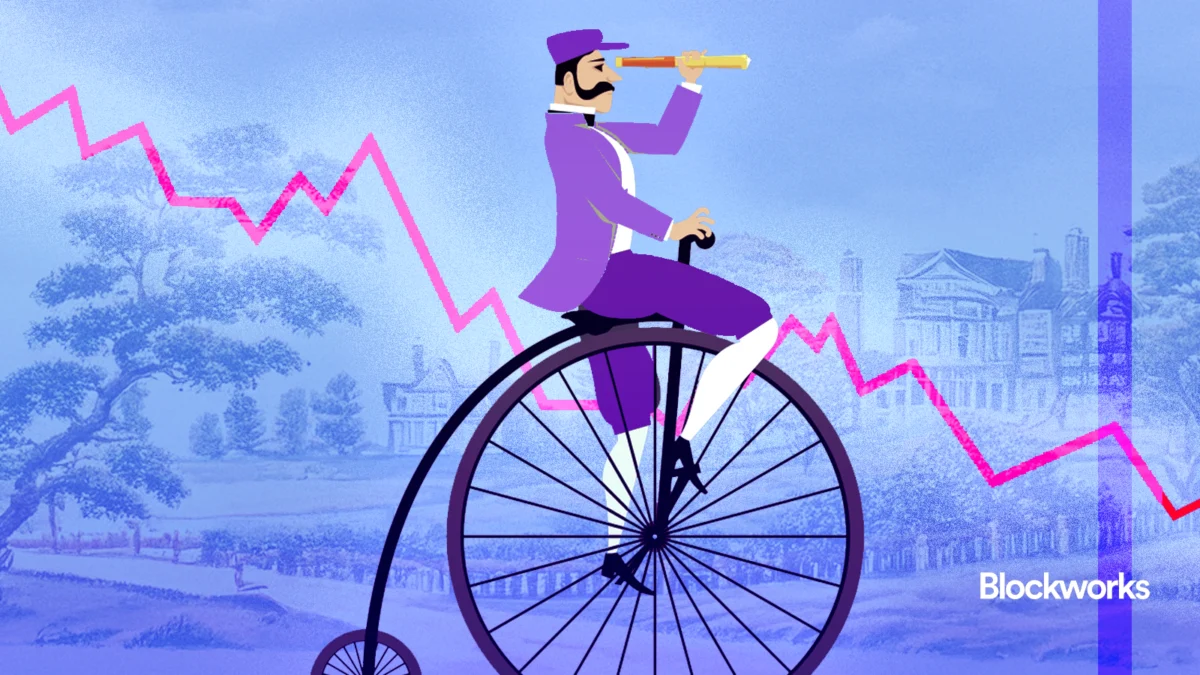
History offers few examples as vivid as the great British bicycle mania of the 1890s. Before that decade, riding a bicycle was a precarious endeavor. Commuters and thrill-seekers alike sat perched directly and dangerously above the comically giant front wheel of the Victorian penny-farthing, a design fraught with safety hazards. That all changed in the 1880s with the introduction of chain-driven mechanisms that transferred pedal power to the rear wheel, leaving the front wheel dedicated entirely to steering.
Combined with diamond-shaped frames, weldless steel tubes, and newly invented pneumatic tires, the bicycle completed its rapid evolution from a dangerous novelty into a practical, smooth, and comfortable mode of transportation and exercise. The public response was immediate and overwhelming. Within just a few years, manufacturing operations exploded. In the industrial hub of Birmingham alone, the number of bicycle manufacturers surged from 72 in 1889 to 177 by 1895.
This rapid expansion sparked a frenzy among investors. As the authors of Boom and Bust: A Global History of Financial Bubbles note, the period stands out as “a particularly clear illustration of the usefulness of bubbles.” Driven by speculative mania, an index of cycle shares skyrocketed by 258% in the first five months of 1896 alone. This massive surge attracted a flood of new stock market listings. In the two-year span leading up to 1897, an astonishing 670 cycle, tube, or tire firms floated shares on England’s regional stock exchanges.
Many of these newly minted public companies were of exceptionally low quality. One striking example was Accles Ltd., a firm that managed to sell £135,000 worth of shares to eager investors yet reported a meager £71 in actual revenue before filing for bankruptcy less than two years later. Predictably, the party could not last. Cycle shares suffered a devastating collapse, losing 73% of their market value from the peak of the Bicycle Mania in early 1896 to the end of 1898.
Yet, as painful as that financial wipeout was for contemporary investors, the systemic aftermath of the bubble was arguably worth the economic collateral damage. The speculative boom radically accelerated research and development in tire manufacturing, innovations that later laid the groundwork for the burgeoning automobile industry. Furthermore, the craze spurred critical advancements in precision machine tools and ball bearings, technologies that rippled across English manufacturing and beyond, modernizing industrial output for decades to come.
More importantly, the massive flood of affordable bicycles generated by the bubble produced an unexpected, deeply modernizing effect on society. At the height of the Victorian era, rigid social expectations dictated that women be chaperoned whenever they traveled outside the home. The widespread availability of bicycles shattered this custom overnight. Chaperoning a woman on a bicycle was entirely impractical, and there were simply too many riders on the road for Victorian social guardians to monitor.
The phenomenon also sparked the “rational clothing” movement. The sheer impossibility of cycling in restrictive corsets and heavy skirts forced the rapid development of more practical dresses and bifurcated garments. It is difficult to overstate how radical a cultural shift this represented.
“Let me tell you what I think of bicycling,” Susan B. Anthony told the New York World in 1896. “I think it has done more to emancipate women than anything else in the world.”
The popular association between feminism and cycling became so profound that the bicycle transformed into an enduring symbol of the suffrage movement. Women rode freely away from Victorian social constraints, carried forward by a booming, over-supplied market of modern bicycles. For that monumental societal leap, history has the overenthusiastic and ultimately burned investors of the 1890s to thank.
Invest like it’s 1999?
This historical disconnect between societal progress and investor returns is a recurring theme in economic history. In 1999, billionaire investor Warren Buffett offered a sobering warning to an exclusive gathering of VIPs in Sun Valley, Idaho, noting that world-changing technologies are frequently ruinous for the investors who correctly predict their ascendance.
The automotive industry serves as a prime example of this phenomenon. “If you had seen at the time of the first cars how this country would develop in connection with autos,” Buffett told the audience, “you would have said, ‘This is the place I must be.’ But [out of] two thousand [auto] companies, as of a few years ago, only three survived… so autos had an enormous impact on America, but in the opposite direction for investors.”
Airlines offered an identical cautionary tale. Buffett pointed out that if an observer could have foreseen the future of aviation back at Kitty Hawk, they undoubtedly would have concluded that aviation was the ultimate place to invest. Yet, he observed, “as of a couple of years ago, there had been zero money made from the aggregate of all stock market investments in the airline industry in history.”
That was Buffett’s way of warning his audience that they could be entirely correct in predicting that the internet would change everything, while simultaneously being entirely wrong about whether investors would profit from it. The dotcom bubble burst just eight months later.
Today, artificial intelligence stands out as an obvious candidate for the next world-changing technology destined to ultimately disappoint financial backers. AI will almost certainly revolutionize every facet of modern life, but which specific companies—if any—will successfully capture and retain the vast economic value it generates remains an open question.
Crypto faces a similar dynamic. Over the past year, fundamental developments have appeared strikingly positive: regulatory attitudes have shifted as the SEC softened its stance, stablecoins achieved legal recognition through legislative milestones like the GENIUS Act, prediction markets entered the mainstream consciousness, and traditional financial institutions scrambled to integrate blockchain infrastructure. Despite these foundational wins, token prices have performed poorly.
That disconnect may simply reflect a reality where market expectations outpaced actual adoption. However, it may also signal a deeper truth: no matter how much foundational value crypto ultimately creates, very little of that value may accrue to the speculative investors who funded its creation.
Consider the widespread enthusiasm surrounding the tokenization of real-world assets. If the vast majority of those traditional assets are ultimately tokenized by established corporate giants like Robinhood, BlackRock, and the Depository Trust & Clearing Corporation (DTCC), the crypto-native investors who financed the underlying infrastructure may capture very little of the resulting economic upside.
Similarly, the cryptocurrency industry has poured billions of dollars into developing advanced cryptographic systems such as zero-knowledge proofs. It is easy to envision how these tools could benefit society, potentially serving as humanity’s primary defense against deepfakes and AI-generated content. Yet, they may prove terrible for token investors. Zero-knowledge proving is fundamentally a mathematical framework, one that does not strictly require a tradeable speculative token to function.
Numerous similar examples exist across the sector, largely because the value crypto originally set out to create was never designed to be captured by traditional rent-seekers. Quite the opposite: composable, open-source, and decentralized protocols were explicitly engineered to disintermediate technological gatekeepers and tear down the toll booths of traditional finance.
At the conclusion of a disappointing year for token prices, observers are easily tempted to conclude that the crypto sector is progressing too slowly toward its lofty goals. But if blockchain technology ultimately proves to be as beneficial for global society as the bicycle, no one should complain if it turns out to be just as brutal for investors.





Comments (0)